Navigating Social Situations and Weight Loss Goals –
You stay on track by planning ahead, choosing one or two “worth it” foods instead of everything, eating slowly, setting a drink limit before you arrive, and having a polite line ready for food pushers. Weight loss depends on your overall pattern across weeks, so one dinner out won’t undo your progress — the habit of giving up after it will.
In Singapore, social life revolves around food. Team lunches at the hawker centre, makan sessions with friends, wedding banquets, Chinese New Year visiting, Hari Raya open houses and Deepavali feasts all put food at the centre of connection.
That’s a good thing. But if you’re working towards a weight loss goal, it can feel like every invitation is a test. This guide covers practical, realistic strategies to enjoy your social life and still make progress — without being “that person” who orders a plain salad and leaves early.
Why do social situations make weight loss harder?
Social eating makes weight loss harder because we tend to eat more, eat faster and pay less attention when we’re with others. Researchers call this “social facilitation of eating,” and studies by psychologist John de Castro found that meals eaten with other people are generally larger than meals eaten alone, with portions growing as the group gets bigger.
Several other factors stack on top:
- Shared dishes: Zi char and family-style meals make it hard to track how much you’ve actually eaten.
- Mindless grazing: Snacks at parties and pantry treats at the office add up without a proper “meal” ever happening.
- Alcohol: It adds calories (about 7 kcal per gram) and lowers your resolve around food.
- Social pressure: Comments like “Just one won’t hurt” or “Why are you dieting?” make saying no feel rude.
- All-or-nothing thinking: One indulgent meal turns into “I’ve already blown it, so I’ll restart Monday.”
The good news: each of these has a simple counter-strategy.
Practical strategies for common social situations
1. Plan before you go
Check the menu online, decide roughly what you’ll order, and don’t arrive starving. A protein-rich snack like Greek yoghurt, a boiled egg or a handful of nuts an hour before stops you from attacking the bread basket or keropok.
2. At hawker centres and food courts
Hawker food can absolutely fit a weight loss plan if you make small swaps:
- Choose soup-based dishes (fish soup, yong tau foo in clear soup) over fried or gravy-heavy ones.
- Ask for “less rice” or “no gravy” — stallholders are used to it.
- Pick steamed or roasted chicken over fried, and remove the skin if you can.
- Add a side of vegetables (“add vegetables” at economy rice stalls).
- Swap sweetened kopi or teh for kopi-O kosong, teh-O kosong or plain water.
3. Restaurant dinners and zi char
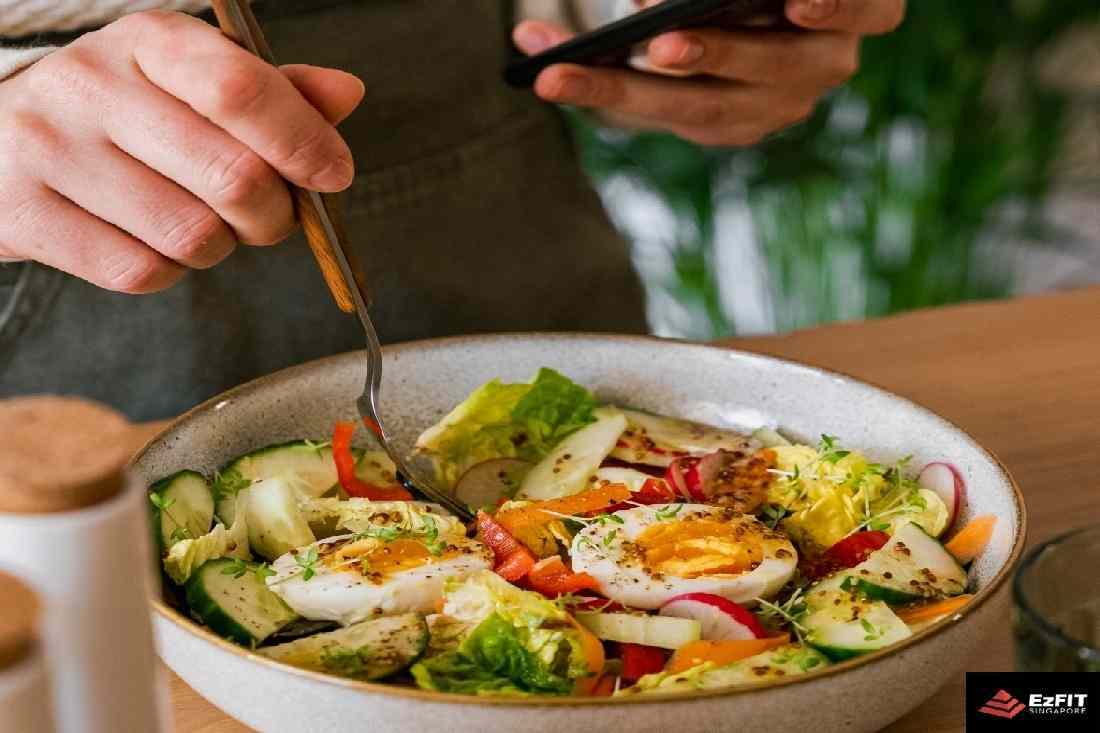
- Fill half your plate with vegetables and lean protein first, then add carbs.
- Use a smaller plate or bowl for shared dishes, and serve yourself once rather than picking continuously.
- Put your chopsticks down between bites and join the conversation — slower eating helps fullness signals catch up.
- Share dessert, or have a few spoonfuls instead of a whole portion.
4. Office lunches, pantry snacks and birthday cake
- Suggest venues with healthier options when it’s your turn to choose.
- Keep your own snacks (fruit, nuts, protein bars) at your desk so the pantry isn’t your only option.
- For office birthdays, take a small slice, enjoy it, and move on — no guilt needed.
5. Festive seasons: CNY, Hari Raya, Deepavali and Christmas
Festive periods stretch over days or weeks, so the goal is maintenance, not perfection.
- Pick your favourites: if pineapple tarts are your thing, enjoy two and skip the bak kwa (or vice versa).
- Don’t graze at every house — have a proper portion, then step away from the snack table.
- Keep moving: schedule workouts around festive visits and take walks after big meals.
- Get back to your routine the next day rather than “after the holidays.”
6. Parties, weddings and banquets
- At a multi-course banquet, take small portions of each course rather than seconds of your favourite.
- Stand away from the buffet line or snack table when you’re chatting.
- Focus the evening on people, not plates.
7. Drinking and weight loss
Alcohol is one of the easiest ways for calories to sneak in. A pint of beer or a cocktail can easily carry 150–300 kcal, before the late-night supper it encourages.
- Decide your limit before you arrive (for example, two drinks).
- Alternate each alcoholic drink with a glass of water or soda water.
- Choose lower-calorie options: spirits with soda water and lime, light beer, or a wine spritzer.
- Avoid sugary mixers and creamy cocktails.
- Eat a proper meal before drinking so you’re not ordering fries at midnight.
How do you say no to food without being rude?
The easiest way to decline food politely is to be warm, brief and confident — you don’t owe anyone a long explanation. Having a few lines ready in advance makes it much easier in the moment.
Situation | What you can say |
|---|---|
A relative offers seconds | “It was so good, I’m properly full! Can I take some home?” |
A friend insists on dessert | “I’ll have a bite of yours — that’s my perfect amount.” |
Someone pushes another drink | “I’m good with this one, I’m driving / training early tomorrow.” |
A colleague teases your order | “I’m working on a fitness goal and feeling great about it.” |
A host keeps refilling your plate | “Everything’s delicious — I’m just pacing myself tonight.” |
A few more tips that help:
- Tell close friends and family about your goal. People who know you’re working on something are far more likely to support you.
- Hold a drink or a small plate. People offer less when your hands are already full.
- Bring a dish. At potlucks, bring something healthy and tasty so you know there’s at least one good option.
- Find an ally. A friend or partner with similar goals makes ordering well feel normal, not awkward.
The right mindset: flexible, not perfect
The most successful approach to weight loss in social situations is consistency over perfection. A diet so strict that you skip every gathering rarely lasts, and isolating yourself takes a toll on your wellbeing.
Many trainers recommend an 80/20 approach: make supportive choices around 80% of the time, and enjoy social meals and treats the other 20% without guilt. Over a week of roughly 21 meals, a couple of indulgent dinners won’t decide your results — your everyday habits will.
If you do overeat at a dinner or party:
- Don’t compensate by starving the next day. It often leads to another overeating cycle.
- Go back to your normal routine at your very next meal. Not Monday, not next month.
- Hydrate, sleep well and move. A walk or your usual workout helps you feel back in control.
- Reflect, don’t punish. Ask what you’d do differently next time, then let it go.
How regular training gives you more breathing room
Regular strength training makes social eating easier to manage because it builds lean muscle, supports a healthy metabolism and keeps you consistent when your diet isn’t perfect. It also gives you a routine to return to after a busy weekend of gatherings.
The challenge for many people in Singapore is time. Long work hours plus a packed social calendar leave little room for hour-long gym sessions.
That’s where EzFit Singapore comes in. Our personal trainers combine guided training with Power Plate whole-body vibration sessions, which are designed to be time-efficient so you can fit effective workouts into a busy week. Your trainer can also help you plan around festive seasons, travel and social events so your progress doesn’t stall every time life gets busy.
Ready to reach your goals without giving up your social life? Book a trial session with EzFit Singapore and get a plan that fits the way you actually live.
Frequently Asked Questions (FAQ)
Can I still lose weight if I eat out often?
Yes. You can lose weight while eating out regularly by choosing grilled, steamed or soup-based dishes, controlling portions of rice and noodles, limiting sugary drinks, and keeping your overall weekly calorie intake in check.
Will one big meal ruin my weight loss progress?
No. One large meal causes a small, temporary change, much of it water and food weight. Fat loss depends on your habits across weeks, so returning to your normal routine at the next meal is what matters most.
What are the healthiest hawker centre options in Singapore?
Good hawker choices include sliced fish soup, yong tau foo in clear soup, steamed chicken rice with less rice and no skin, chapati with dhal, and economy rice with extra vegetables and lean protein. Choose kopi-O or teh-O kosong over sweetened drinks.
How many drinks can I have and still lose weight?
There’s no fixed number, but fewer is better. Setting a limit before you go (such as one or two drinks), alternating with water and avoiding sugary mixers helps keep alcohol from stalling your progress.
How do I handle family members who push food on me?
Thank them warmly, compliment the food and use a short, friendly line such as “It was delicious, I’m properly full!” Telling close family about your goals in advance usually reduces the pressure.
How do I stay on track during Chinese New Year or Hari Raya?
Focus on maintaining rather than losing during festive periods. Pick a few favourite treats, avoid grazing at every visit, stay active with walks or workouts, and return to your routine straight after.
Does exercise help with weight loss if I eat out often?
Yes. Regular exercise, especially strength training, supports muscle and metabolism and makes it easier to maintain progress. A personal trainer can help you build a routine that fits around your social schedule.
Conclusion
- Social eating isn’t the enemy of weight loss — all-or-nothing thinking is.
- Plan ahead, arrive not-too-hungry, and choose the foods that are truly worth it.
- Small hawker swaps (less rice, soup over fried, kosong drinks) add up over time.
- Set a drink limit before you go and alternate with water.
- Keep a few friendly “no thank you” lines ready.
- Get back to your routine at the next meal, and use regular training to stay consistent.