12 Tips for Finding the Right Workout Shoes – The right workout shoe matches three things: your foot type, your primary activity (running, lifting, HIIT, or cross-training), and a fit with a thumb’s-width of space in the toe box. Beyond that, prioritize cushioning for high-impact cardio, a flat stable sole for lifting, and lateral support for court or agility work. Replace shoes every 300–500 miles or 6–8 months of regular use.
Introduction
Walking into a shoe wall of 200 near-identical sneakers is overwhelming. The wrong pair doesn’t just feel uncomfortable — it can cause shin splints, blisters, plantar fasciitis, or knee pain that sidelines your training for weeks. The right pair, on the other hand, disappears on your feet and lets you focus on the workout itself.
Below are 12 practical, research-backed tips to help you choose workout shoes that actually fit your body, your goals, and your budget.
1. Identify Your Primary Workout Type First
Shoes are built for specific movement patterns, not “exercise” in general.
- Running/cardio: cushioned, flexible, built for forward motion
- Weightlifting: flat, firm, minimal cushioning for stability
- HIIT/CrossFit: hybrid — some cushioning, but flatter and more supportive than running shoes
- Court sports (basketball, tennis, pickleball): lateral support and traction for side-to-side movement
Buying a running shoe for lifting (or vice versa) is one of the most common — and most avoidable — mistakes.
2. Know Your Foot Type and Arch
Do a quick “wet test”: wet your foot and step on paper or a dark tile.
- Flat arch (full footprint): look for stability or motion-control shoes
- Neutral arch (moderate curve): most standard workout shoes work well
- High arch (thin connecting strip): prioritize extra cushioning for shock absorption
3. Get Measured — Don't Guess Your Size
Feet change size with age, weight fluctuations, and even pregnancy. Have both feet measured (length and width) at least once a year, and always buy for your larger foot. Sizing also varies by brand, so don’t assume your usual number is universal.
4. Leave a Thumb's Width in the Toe Box
With the shoe laced snugly, you should be able to fit a thumb’s width between your longest toe and the front of the shoe. Too tight causes black toenails and numbness; too loose causes blisters and instability.
5. Try Shoes On Later in the Day
Feet swell throughout the day and during exercise, sometimes by half a size. Shopping in the afternoon or evening — and wearing the socks you’ll actually train in — gives a more accurate fit than a morning try-on.
6. Match Cushioning to Impact Level
- High-impact (running, jump training): more cushioning to absorb repeated shock
- Low-impact (lifting, yoga, Pilates): less cushioning, more ground contact for balance and power transfer
Too much cushioning during lifting can actually reduce stability and force output.
7. Prioritize a Stable, Non-Slip Outsole
Grip matters more than most people realize. Test the sole’s flex point (it should bend where your foot naturally bends, not in the middle) and check that the tread pattern suits your training surface — gym floor, track, trail, or turf.
8. Consider Breathability and Material
Mesh uppers keep feet cool during high-intensity sessions; synthetic overlays add durability and support for lateral movement. If you sweat heavily, a breathable, moisture-wicking upper reduces blisters and odor.
9. Don't Ignore Width Options
Many brands now offer narrow, standard, and wide sizing. If your foot feels squeezed or slides side to side in a standard width, try the alternate before assuming the shoe just “doesn’t fit your brand.”
10. Test Them in the Store (or on a Treadmill)
Walk, jog in place, lunge, and do a few bodyweight squats before buying. A good shoe should feel supportive immediately — there’s no real “break-in period” required for properly fitted athletic shoes, despite the common myth.
11. Set a Realistic Budget — But Don't Skimp on Function
Higher price doesn’t always mean better performance, but ultra-cheap shoes often cut corners on midsole support and outsole durability. A mid-range shoe (roughly $80–$150) from a reputable brand typically balances quality and cost well for most exercisers.
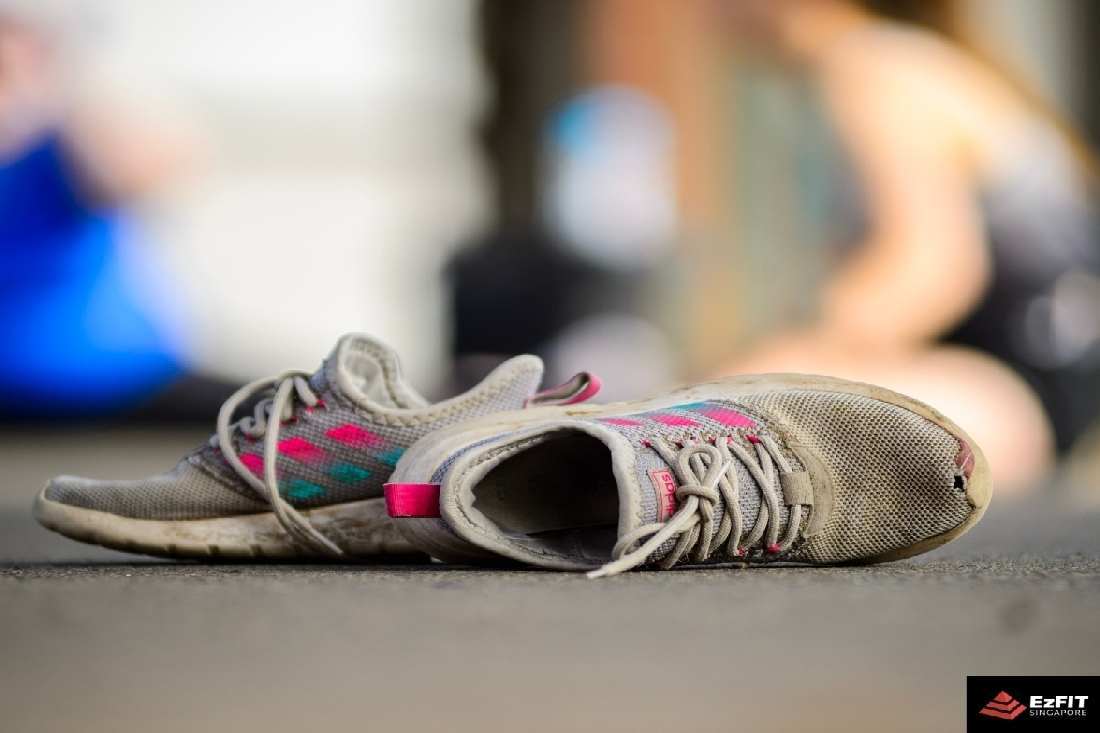
12. Replace Shoes on a Schedule, Not Just When They "Look" Worn
Cushioning breaks down internally long before the outside looks damaged. General guideline:
| Activity | Replace Every |
|---|---|
| Running | 300–500 miles |
| General gym/cross-training | 6–8 months (regular use) |
| Lifting-only shoes | 1–2 years (lower wear rate) |
Worn-out shoes are a leading contributor to overuse injuries like shin splints and plantar fasciitis.
Frequently Asked Questions (FAQ)
How do I know if my workout shoes fit correctly? There should be a thumb’s-width of space at the toe, no heel slippage when walking, and no pinching across the widest part of your foot.
Can I use running shoes for weightlifting? Not ideally. Running shoes have soft, cushioned soles that compress under heavy load, reducing stability. Flat-soled training or lifting shoes provide a firmer base for lifting.
How often should I replace my workout shoes? Most people should replace running shoes every 300–500 miles and general training shoes every 6–8 months of regular use, even if they still look fine externally.
What’s the difference between cross-training shoes and running shoes? Cross-training shoes are flatter and more stable for lateral movement and lifting, while running shoes have more cushioning and flexibility built for repetitive forward motion.
Do I need different shoes for different workouts? If you regularly do both high-impact cardio and heavy lifting, two pairs (or a well-reviewed hybrid trainer) will outperform a single “do-everything” shoe.
Key Takeaways
- Match the shoe to the activity — running, lifting, and court sports all need different builds.
- Fit beats brand: a thumb’s-width toe box gap and correct width matter more than the logo.
- Replace shoes on a schedule (mileage or months), not just when they look worn.
- Test-walk or jog before buying; a properly fitted shoe needs no “break-in” period.